

After an injury, operation or longer period of limited movement, you may want to begin again. Slowly. With something steady to hold on to. A treadmill at home can bring walking within reach, but it never replaces advice from your doctor or physiotherapist.
In short
A treadmill can be part of a recovery plan when your healthcare professional considers it appropriate. You control the pace, walk on a predictable surface and can repeat a short session without leaving home. The most important step is not going faster. It is finding a level you can safely return to.
- Ask your doctor or physiotherapist whether treadmill walking suits your situation.
- Begin with a pace and duration that match your personal recovery plan.
- Use the side supports for balance, not to carry your body weight for long periods.
- Stop if you experience new or increasing pain, dizziness, shortness of breath or uncertainty.
Which model suits you depends on your recovery; the options are listed under treadmills.
Why use a treadmill during recovery?
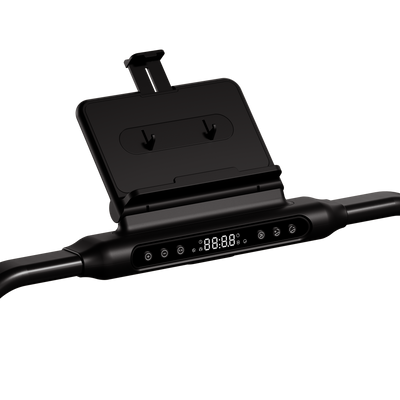
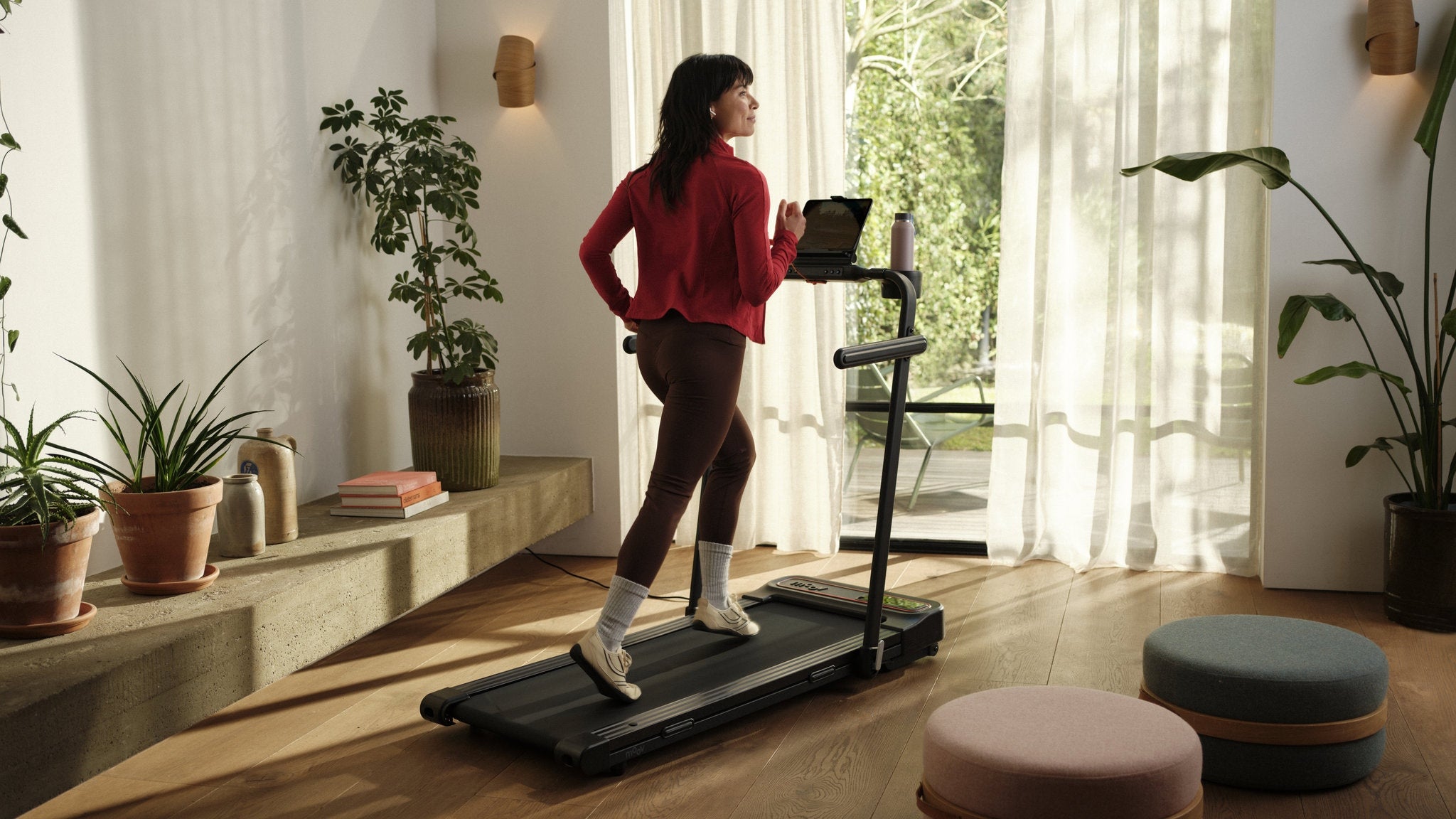
Walking outside involves more than putting one foot in front of the other. Pavements, corners, traffic and changing weather all add variation. At home, the environment is more predictable. That can feel reassuring while you rebuild confidence in movement. The Moov Walk brings a walking moment closer and offers a fixed handrail and foldable side supports for added stability.
Short moments are easier to fit in too. Five minutes after breakfast. A calm walk between two rest periods. It does not all have to happen in one session. Start small. Come back when it feels right.
Only add incline once your practitioner advises it; automatic incline sits on the treadmills with incline.
The practical benefits
Within a professionally prepared recovery plan, a treadmill can offer practical advantages:
- You can choose an even pace and adjust it in small steps.
- You walk on a fixed surface without unexpected obstacles.
- The display shows time, distance and speed.
- You can move at home when it is dark, wet or slippery outside.
- A short walking moment is easy to repeat when your energy varies.
One of the foldable treadmills can be stored between sessions, so your living room doesn't stay an exercise space.
A treadmill can support the plan, not define it
Recovery differs by person, injury and procedure. A general plan can never decide what is safe for you. Use the outline below as a conversation starter with your doctor or physiotherapist, not as a medical prescription.
Is treadmill recovery suitable for older adults?
Age alone says little about what is appropriate. Balance, strength, medication, experience and the type of recovery all matter. A model with a fixed handrail and foldable side supports can provide extra reassurance. The Moov Walk is designed for walking and light jogging up to 8 km/h. It is not a medical device.
Ask a healthcare professional to look at step height, posture, pace and the support you may need. That keeps the treadmill an addition to your recovery plan, rather than the plan itself.
A sample recovery framework
The framework below deliberately avoids fixed speeds. During recovery, the right load is personal. Agree what each phase should involve, how it may feel and what needs to be true before you progress.
|
Week |
Phase |
Possible approach |
Discuss with your healthcare professional |
|
1-2 |
Get familiar |
Short walks at a calm pace |
Posture, support and how you respond afterwards |
|
3-4 |
Repeat |
Complete the same duration comfortably several times |
Frequency and rest days |
|
5-6 |
Build |
Increase either duration or pace by a small amount |
Which variable to change first |
|
7-8 |
Return to daily movement |
Combine treadmill walking with outdoor walking or other movement |
The transition to work, sport and longer distances |
Practical tips
Choose a treadmill that fits your recovery plan and place it on a flat surface with clear space around it.
Wear shoes that feel stable and match the advice you have been given.
Keep the safety stop within reach and learn the controls before stepping on.
Keep a simple log of duration, pace and how you felt during and after each session.
Do not increase speed, duration and incline at the same time.
A disrupted routine is not a failure. Return at the level that fits now.
If you build recovery around your workday, an under-desk treadmill can bring short walks within reach.


