

The day does not look the same every time. Sometimes you want a few steps while working. At another moment you want to jog or run. The right treadmill therefore begins with the movement that fits your day, not with the longest feature list.
In short
Begin with two questions: do you mainly want to walk and light jog, or do you also want to run? And do you prefer a flat surface, or do you want automatic incline?
- Moov Walk: walking and light jogging up to 8 km/h, without automatic incline.
- Moov Walk Plus: walking and light jogging up to 8 km/h, with automatic incline up to 15%.
- Moov Run: walking, jogging and running up to 14 km/h, without automatic incline.
- Moov Run Plus: walking through to running, with automatic incline up to 15%.
More options do not automatically make a model more suitable. Choose what feels close enough to use. Start small. Come back tomorrow.
All four sit side by side on the treadmills page.
Why choosing the right treadmill matters
A treadmill that fits your rhythm is more likely to find a place in your home and in your day. Look beyond speed. Consider the running surface, the free space around the treadmill, how you move it and which functions you will genuinely use.
What stays visible and close is more likely to be used. What gets used can be repeated. The best choice is not necessarily the model with the most options, but the one you can step onto without much preparation.
How do you want to use the treadmill?
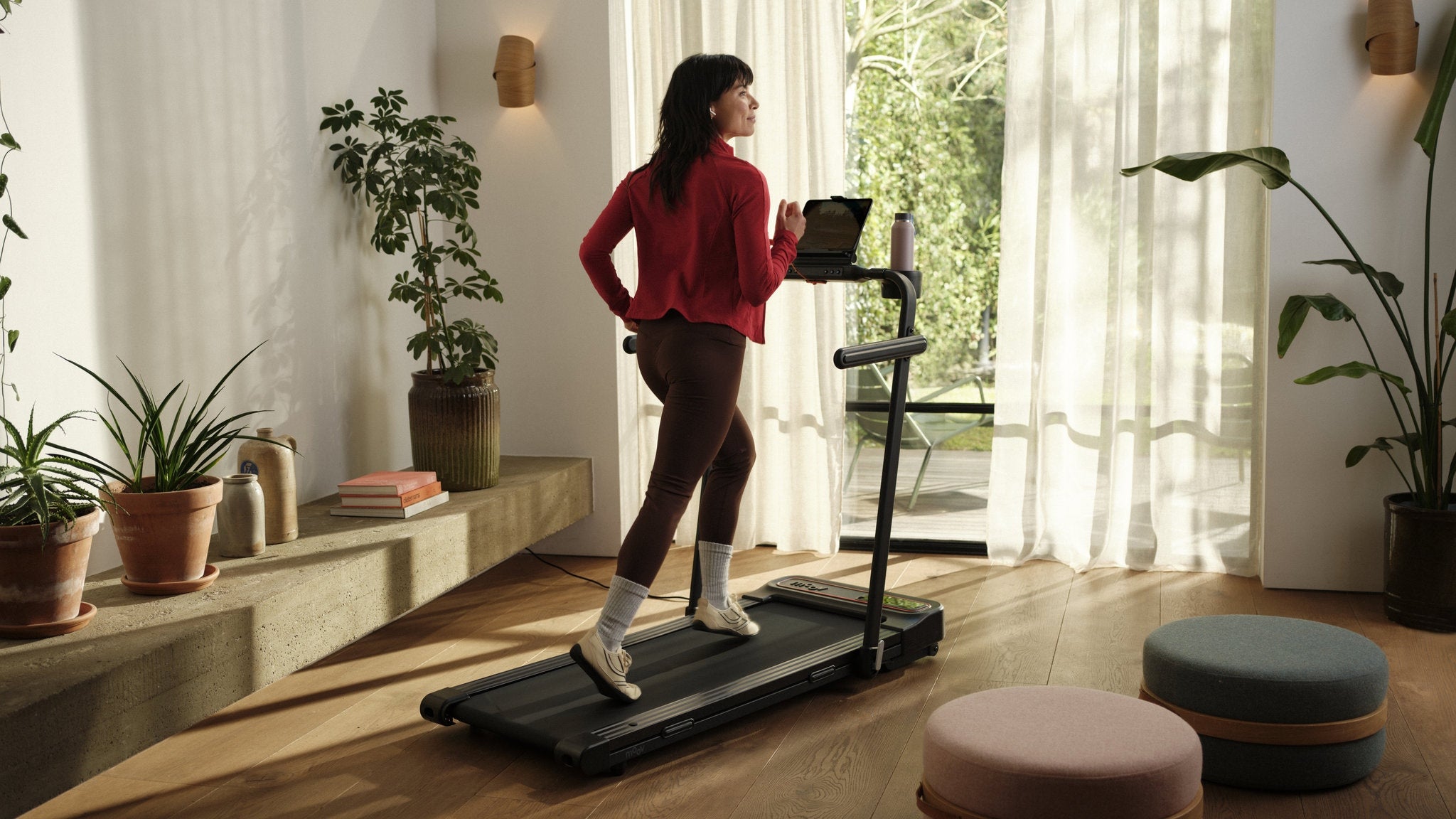
You may want to walk during a phone call. Move for a few minutes between meetings. Or run at home when it is dark or wet outside. Begin with that everyday moment.
For daily steps and occasional light jogging, the Walk range matches that use. For running at a higher pace, the Run range adds speed and a larger running surface. Plus models add automatic incline for more variation without requiring you to move faster.
Moov sits alongside outdoor walking and running, sport and the gym. It is there for the moments that would otherwise pass without movement.
Decide which features matter to you
A feature only helps when you use it. Choose from your routine, not from a long specification list.
Speed
The Walk range reaches up to 8 km/h and is designed for walking and light jogging. The Run range reaches up to 14 km/h and suits people who also want to run. A higher top speed is not a goal in itself. It gives you room to move at your pace.
Size
Measure the place where you want to move, the route to it and the area where the treadmill will stay. The Walk range is more compact. The Run range is longer, giving your stride more room at higher speeds.
The side supports fold down on every model. The non-incline models have 360° wheels; Plus models move forwards and backwards. That also lets you choose based on how often you plan to reposition the treadmill.
Cushioning
All four models include shock absorption. This makes the movement more comfortable and helps the running surface absorb some of each step. Comfort is personal. Build gradually and choose a pace that fits how you feel that day.
Running surface
Walk models use a 100 × 40 cm surface for walking and light jogging. Run models use a 120 × 44 cm surface. That extra room becomes useful as your stride lengthens and the pace rises.
Additional features
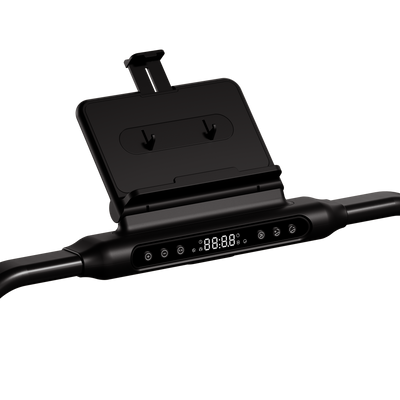
All models include two displays, handrail and remote controls, foldable side supports, twelve built-in programmes, a Bluetooth speaker and compatibility with Zwift and Kinomap. Plus models also display and control automatic incline.
Look at what makes the day simpler. A display in sight. Support when it feels useful. A programme for variation. You do not need to use everything at once.
The versions with automatic incline are grouped under treadmills with incline.
What can you use a treadmill for?
A home treadmill can fit different moments: before the first meeting, during a calm phone call, while the children sleep or when the weather makes an outdoor walk less appealing. Five minutes count. A longer session counts too.
If you mainly want to move during work, look at the under-desk treadmills.
Recovery
Calm walking may form part of a recovery plan, but a treadmill does not replace advice from a doctor or physiotherapist. Discuss pace, duration and support when recovering from injury, illness or a procedure. Foldable side supports can provide reassurance, but your recovery plan determines how you use them.
Frequent use
When you plan to use the treadmill often, consider the type of movement, the number of users and the place in your home. Every model uses a brushless motor and carbon-steel frame. Maintenance still matters: keep the running surface clean and follow the instructions for lubrication and adjustment.
If you move the treadmill often, start with the foldable treadmills.
What should you check before buying a treadmill?
Walk through these points calmly before choosing:
- Decide whether you mainly want to walk, light jog or run.
- Choose whether automatic incline adds something to your routine.
- Measure the use area, storage space and doorways in your home.
- Check whether the maximum user weight of 120 kg is suitable.
- Think about how often you will move the treadmill.
- Decide which controls and additional functions you will actually use.
This creates a choice that feels right today and remains easy to return to later.
Do you prefer running or walking?
Choose the Walk range when you mainly want to walk and light jog. Choose the Run range when you also want to run and need more room for a longer stride. Add a Plus model for incline. Choose the standard model when keeping things flat feels simpler.
Walking or running. Flat or incline. Two choices bring you to the model that fits your day.
Did you know?
A routine does not have to continue perfectly to have value. A busy week can interrupt the rhythm without erasing it. Step back on when it fits. Returning is not starting over.
Why choose a treadmill instead of only training outside?
Outdoor movement remains valuable. A treadmill at home is an addition for the moments when going outside does not fit the day. Rain, travel time, a full calendar or needing to stay home: the threshold becomes lower when movement is already in the room.
Move outside when you can. Step on at home when that fits better. That is how movement stays part of real life.


