

You want to move more, but the day is already full. A treadmill can bring walking or running closer. Movement supports energy use and overall health, but weight loss does not come from one machine or one workout. It develops through the wider pattern of food, movement, sleep and time.
In short
- A treadmill makes movement at home easier to plan.
- Weight loss generally requires an energy deficit over time.
- Movement supports that process and also matters beyond the number on the scale.
- A repeatable rhythm tends to work better than a short period of very intense training.
- The plans below are general examples, not personal medical advice.
Why use a treadmill for weight management?
A walk after dinner. Twenty minutes during a series. A calm session before work begins. Moving at home removes travel time and makes the weather less decisive. The step to begin becomes smaller.
That is where a treadmill is most useful. Not because every session needs to be big, but because it becomes easier to return. One walk changes little. A pattern of movement can begin to add up.
The benefits
- Walking, jogging and running all use energy.
- You can adjust duration, pace and, where available, incline to your current level.
- A short session can fit between work, care and other commitments.
- Regular movement can support fitness, strength and general wellbeing.
- Walking can sit alongside a phone call, podcast or calm viewing task.
How many calories do you burn while walking?
It varies by person and by session. Body weight, speed, duration, incline, walking technique and fitness all play a part. The calorie figure on a treadmill is therefore an estimate, not a measurement of your exact energy use.
Treat calorie figures as an estimate
Use the number on the display as a rough indication within your own routine. Comparing similar sessions with yourself is more useful than comparing one estimate with someone else’s.
Is a walking treadmill suitable for older adults?
Walking can be an accessible form of movement for many people, but what fits depends on health, balance, medication and experience. Speak to a doctor or another qualified professional when you have symptoms, are returning after a long inactive period or are recovering from a procedure.
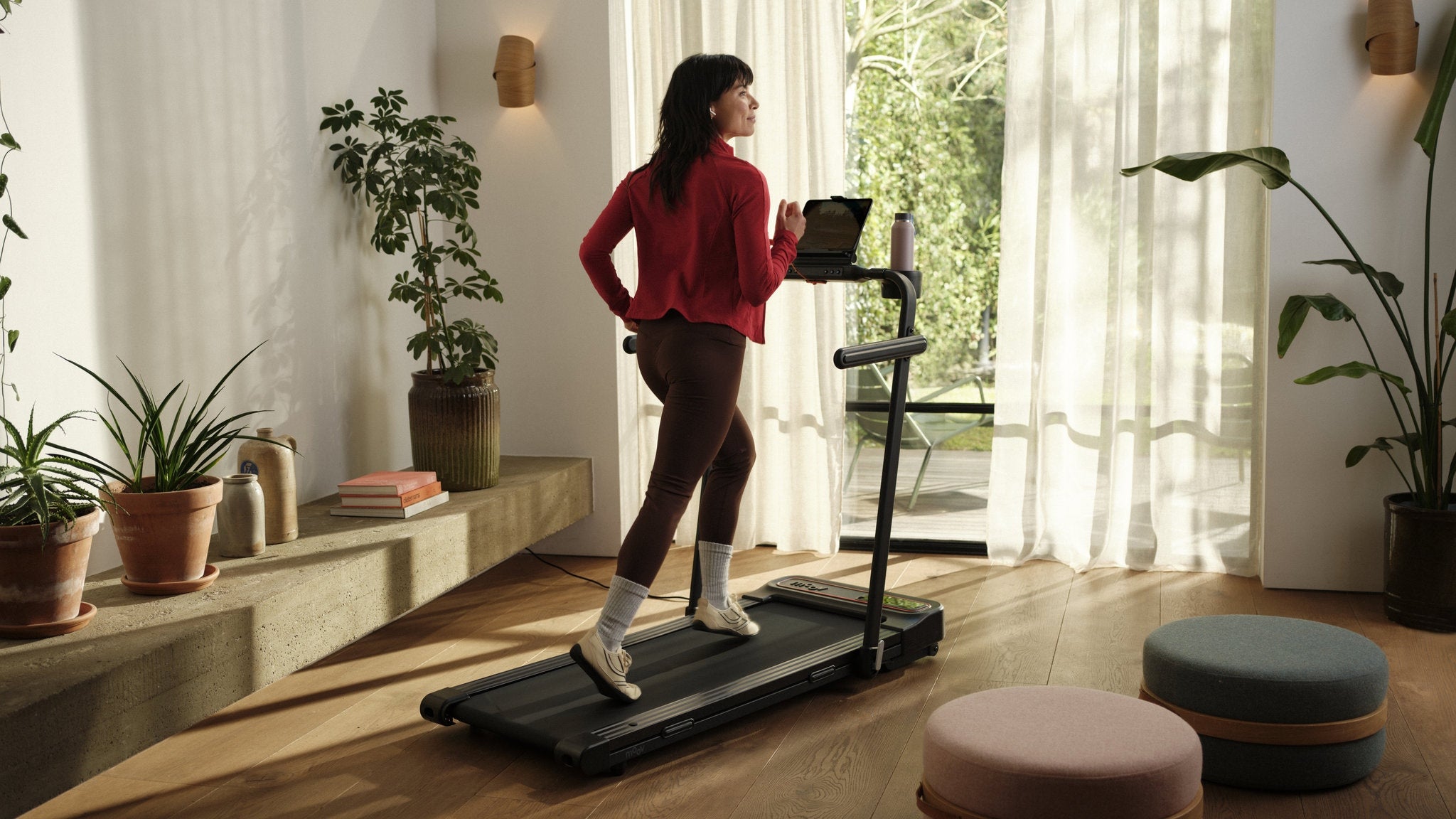
The Moov Walk is designed for walking and light jogging up to 8 km/h and includes foldable side supports. A treadmill is not a replacement for medical guidance.
Sample treadmill plans
The plans below can help you schedule movement. Adjust the pace if you can no longer walk in control or your posture changes. Stop when symptoms arise and ask for advice when your health requires it.
1. Walking plan – build a calm rhythm
|
Week |
Frequency |
Duration |
Pace |
|
1-2 |
3 times |
20–25 min |
Comfortable walking |
|
3-4 |
3–4 times |
25–35 min |
Comfortable to brisk walking |
|
5-6 |
3–4 times |
25–35 min |
Comfortable to brisk walking |
|
7-8 |
4 times |
30–40 min |
Alternate calm and brisk walking |
Practical tips for a lasting rhythm
- Make the goal specific, such as three walking moments each week.
- Connect movement to a familiar moment, such as after lunch or before your first meeting.
- Track energy, sleep and fitness too. Not only weight.
- Combine walking with strength-building movement that suits you.
- Keep the treadmill visible or easy to reach.
- Keep maintenance simple with suitable accessories.
- A missed week does not erase the movement that came before it. Pick it up calmly.


