

Twelve percent incline. Three miles per hour. Thirty minutes. That's the 12-3-30 method — no complicated warm-up, no special shoes. Just steady walking while the incline does the work. In this article: what the method involves, what it can do for you, how to start, and which treadmill fits it best.
What is the 12-3-30 method?
The name is the method: 12% incline, 3 mph (4.8 km/h), 30 minutes of walking. It was created by US influencer Lauren Giraldo and shared on TikTok, where it quickly became one of the most popular treadmill routines worldwide. The appeal is simple. It's easy enough to start, challenging enough to feel. You walk. The incline does the rest.
Why does incline walking work so well?
A flat walk is good for both physical and mental health, but your heart rate stays relatively low. Once you add an incline, your leg, glute and calf muscles work harder. Your heart rate rises and calorie burn increases – without running.
Research shows incline walking raises your heart rate similar to easy jogging, but with much less impact on knees and joints. That makes the method suitable for people who find running too stressful, those recovering from injury, or anyone who prefers walking. Mentally, walking is also more accessible than running. The rhythmic motion calms you, and after 30 minutes your stress level measurably drops.
In short: what does the 12-3-30 method give you?
What you get from a session depends on your weight, age and fitness. But generally:
- 250 to 400 kcal burned per session;
- A heart rate similar to light jogging;
- Activation of glutes, hamstrings and calves;
- Less joint impact than running;
- Improved fitness over time;
- Lower stress.
Who is the 12-3-30 method suitable for?
Almost everyone, which helps explain its appeal. You don't need running experience. Just a treadmill. It's a good fit if you:
- Want a simple, repeatable routine you don't have to think about;
- Walk while working, watching something or on a call;
- Want more movement without high joint impact;
- Are returning after a quieter period;
- Want to build strength in your legs.
How do you start?
Step on, set the incline to 12%, the pace to 4.8 km/h, and walk for 30 minutes. That's it. But if you're just starting or restarting, don't go full intensity straight away — incline walking is harder than it looks. Listen to your body. Building up steadily helps you avoid injury:
|
Week |
Incline |
Speed |
Duration |
|
1-2 |
4% |
4.0 km/h |
15 min |
|
3-4 |
6% |
4.5 km/h |
20 min |
|
5-6 |
8% |
4.8 km/h |
25 min |
|
7+ |
12% |
4.8 km/h |
30 min |
How often per week?
Three times a week is a good starting point. Every workday is even better. But tailor it to your body and your life — consistency matters more than frequency. Combine it with whatever else you enjoy: strength work, yoga, outdoor walks. The 12-3-30 method fits alongside your day. It doesn't replace everything else.
Which treadmill do you use for the 12-3-30 method?
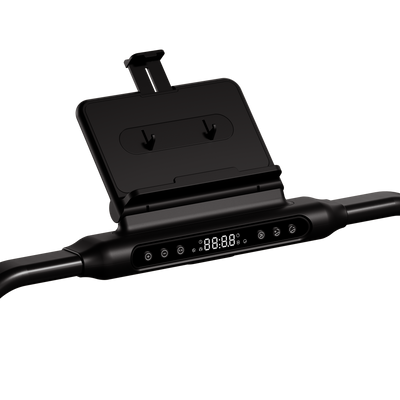
You need a treadmill with automatic incline. The method calls for 12%, and not every treadmill offers that. The Moov Walk Plus and Moov Run Plus both go up to 15% automatic incline, so you can follow the method fully — and go beyond it when you're ready. Compact, quiet, and designed for daily use at home.


