

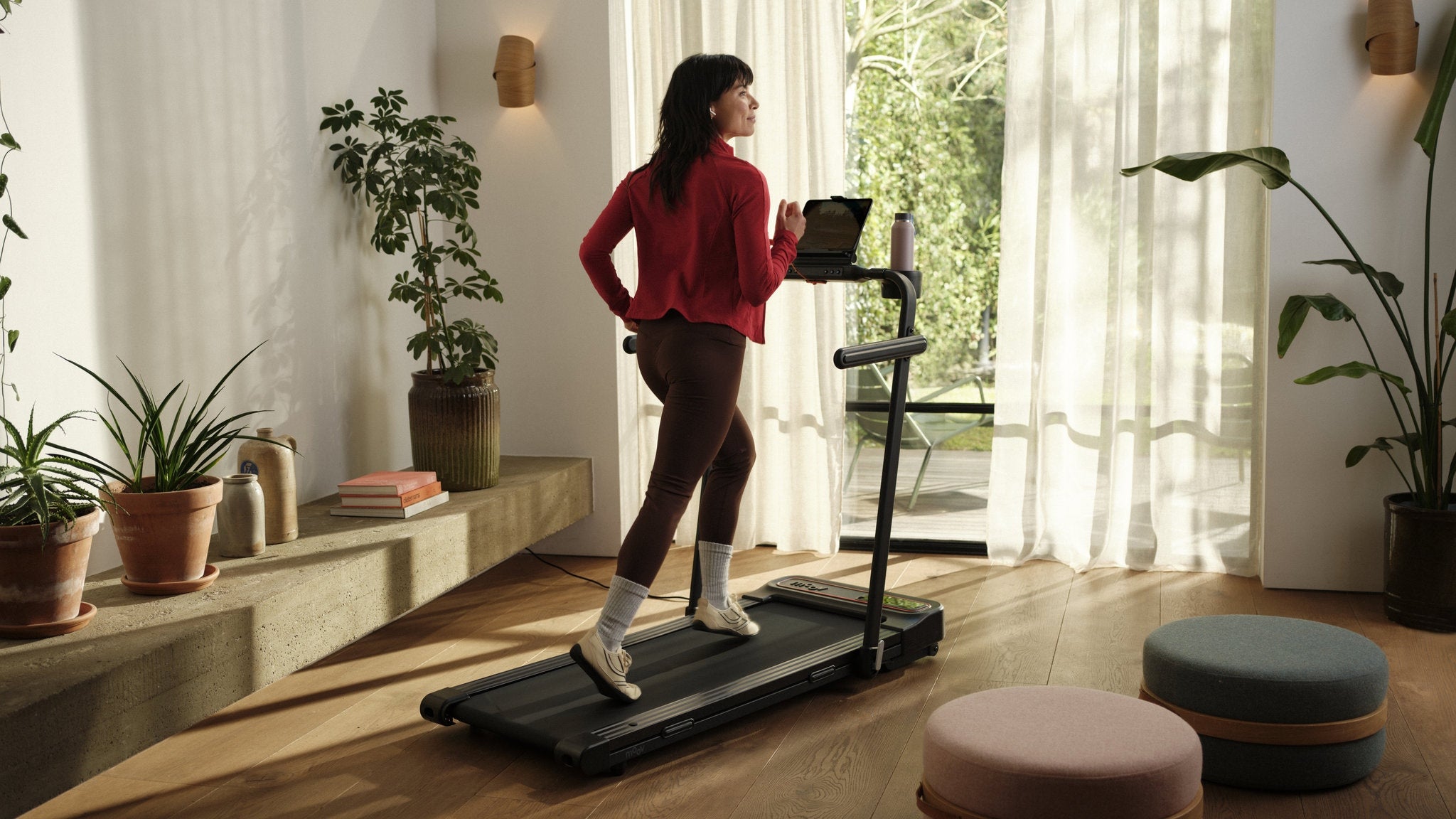
You do not need to move faster to feel more effort. Incline changes the same walk. Your calves, thighs and glutes work differently, and your breathing rises sooner. Begin low. Keep your posture calm. Build only when it feels familiar.
In short
- Incline recreates uphill walking and usually raises the effort.
- A small percentage can already feel clearly different.
- Lower the speed when your posture changes or you begin to hang on the rail.
- Avoid increasing incline, duration and pace sharply at the same time.
- The well-known 12-3-30 workout is more demanding than its simple name suggests.
What is incline walking?
During incline walking, the running surface tilts upwards. Each step requires more work against gravity. On a treadmill, you can set the percentage precisely and change it during the session.
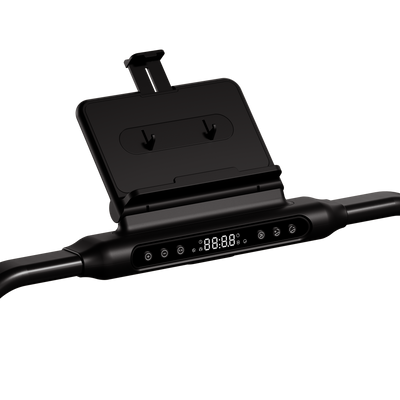
The Moov Walk Plus and Moov Run Plus offer automatic incline up to 15%. That maximum is an option, not a starting point. A much lower incline is enough for many sessions.
Storing the treadmill between sessions? Then look at the foldable treadmills.
The benefits
More muscle activity
Uphill walking asks more from muscles including the calves, hamstrings, thighs and glutes than flat walking. The size of the difference depends on incline, pace and technique.
More cardiovascular effort
Your heart rate and breathing can rise faster at the same pace. This lets you create a brisk session without automatically moving at a high speed.
Higher energy use
Because the effort rises, your body will generally use more energy than at the same pace on a flat setting. The display still provides an estimate rather than an exact measurement.
Variation in your routine
A few short incline blocks can make a familiar walk feel new. Flat. Slightly uphill. Back again.
If you walk during work, keep the incline low; the suitable models are listed under under-desk treadmills.
A different load, not automatically a lighter one
Incline walking may involve less impact than running at a high speed, but it asks more from other areas such as the calves and Achilles tendons. ‘Gentler on the joints’ does not mean the same thing for every person.
Not every model does this; you can see which ones under treadmills.
Training on an incline treadmill
Begin with 1 to 3% incline at a pace where you stay upright. Keep your steps short and natural. Do not pull yourself upwards on the handrail. Use it briefly for balance or to operate the controls.
Do your calves become heavy quickly or does your stride change? Lower the incline first. More is not the goal. A stable movement is.
Choose one of the treadmills with incline, so you can adjust the percentage during your session.
The 12-3-30 workout
The 12-3-30 workout uses 12% incline, 3 miles per hour — around 4.8 km/h — and 30 minutes of walking. For many people, that is a demanding session. The fixed numbers make it memorable, but not automatically suitable.
Create your own version when needed: 4% incline, a calm pace and 15 minutes. Or blocks of two minutes uphill and two minutes flat. The effect comes from effort that fits you, not from copying three numbers exactly.
One reliable foundation: build gradually
Begin with a small load and increase it over time. A steady technique and a session you can repeat matter more than the highest percentage on the display.
What can happen when incline training is poorly controlled?
Building too quickly can cause overload, particularly around the calves, Achilles tendons, feet, knees or lower back. Hanging on the rail also changes your posture and the quality of the movement. Stop when you feel pain, become dizzy or lose control.


