

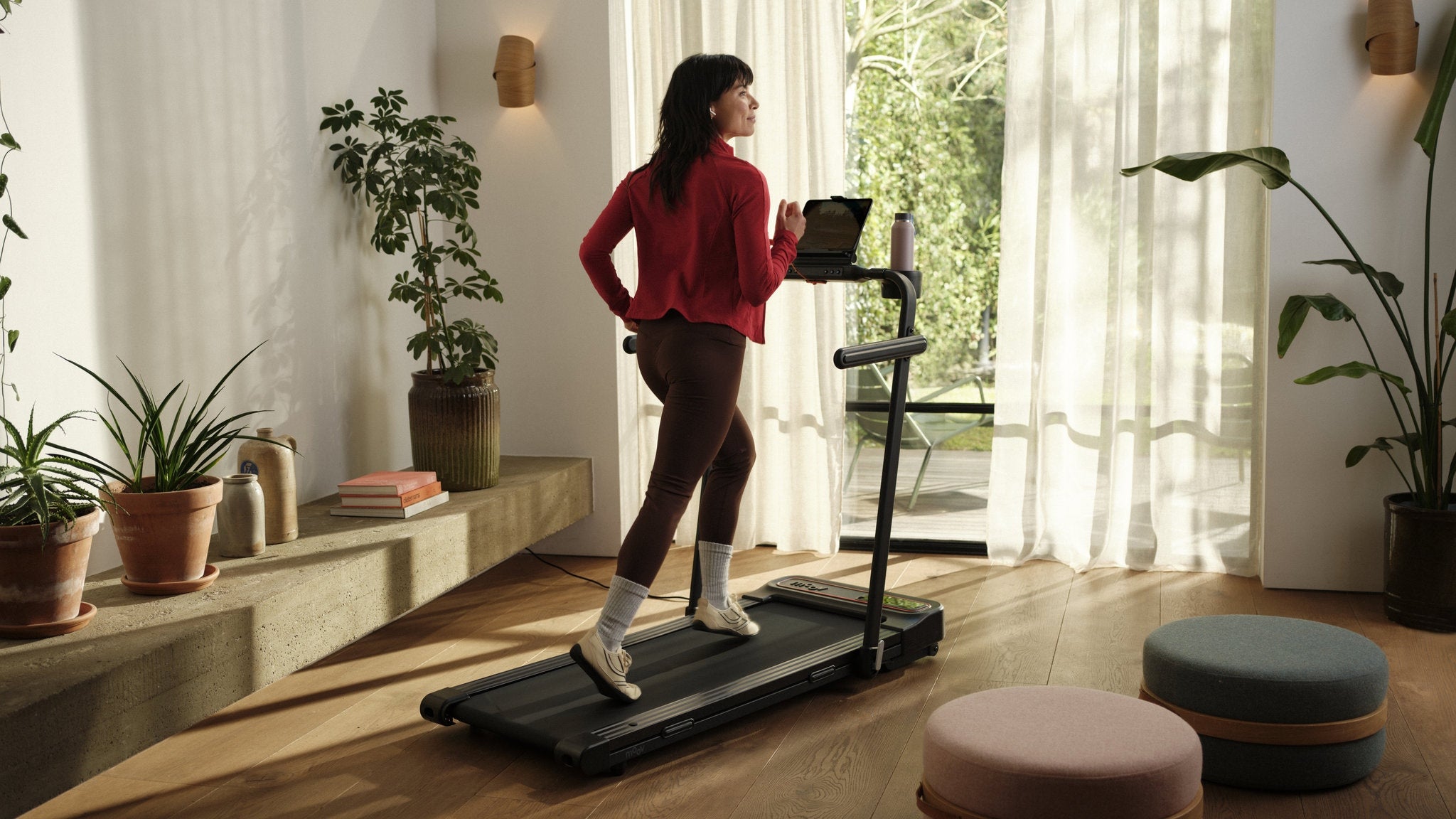

Whether you are training for your very first 5k or preparing for the magic of a marathon: the treadmill is your ultimate training partner. Supplementary treadmill training offers a controlled environment where you are in charge of your pace, incline, and recovery. Discover the benefits of treadmill training and how to optimally combine indoor and outdoor sessions.
Outdoor vs. indoor running: the benefits of the combination
Running outdoors is, of course, an irreplaceable experience; the wind in your hair, the sun on your face, and the birds cheering you on. Many runners swear by training in the open air. But the outdoors is also unpredictable; not everyone enjoys training in the rain or has access to the perfect running surface. The treadmill offers advantages that you simply won't find on the asphalt:
- Lower impact: the cushioning of a Moov treadmill protects your joints, which is essential during long training blocks (15 km+) to prevent injuries.
- Pace control: on a treadmill, you are forced to maintain a constant speed. This is the most efficient way to improve your aerobic fitness.
- Higher efficiency: by training with the incline function, you can simulate hill workouts that are often hard to find outdoors. This strengthens your muscles in a controlled and efficient manner.
- Consistency: no weather conditions or traffic jams to ruin your plans. Your training always happens on your terms, whenever it suits you.
By combining outdoor runs with treadmill sessions, you make it easier to stick to your schedule. Training becomes easier to fit into your life, allowing you to work not just on exertion, but also on relaxation.
Why a treadmill makes you a better runner
Beyond the physical benefits, the treadmill helps you train in very specific ways that are often more challenging outdoors:
- Data-driven training: on the treadmill, you see immediately how a small change in pace or incline affects your heart rate. This direct insight helps you get to know your body better. You don't train just based on how it feels, but based on facts, reducing the risk of overtraining.
- Distraction-free intervals: outdoors, you have to deal with traffic, curbs, or other pedestrians. On a treadmill, you can execute interval training (like 400m sprints) with second-by-second precision. You set the speed, and the belt ensures you maintain that cadence.
- Mental resilience: let’s be honest - an hour on a treadmill requires a different kind of focus than a trail run through the woods. By training indoors, you develop the mental discipline needed during the final kilometers of a race. You learn to embrace repetition and build a powerful sense of focus.
How to smartly combine indoor and outdoor running
The ideal routine is a 70/30 or 60/40 split. Perform your shorter, intensive sessions (like intervals or hill climbs) and your recovery runs on the treadmill. The treadmill absorbs the shocks and gives you total control. Save your weekly long run for the outdoors, so your ankles and knees can adapt to the irregularities of the road surface. This way, you get the absolute best of both worlds.
Do’s & don'ts for treadmill running
Do’s:
- Use the incline: set the treadmill to a standard 1% or 1.5% incline. This compensates for the lack of air resistance indoors and makes the transition to outdoor running feel seamless.
- Focus on cadence: use the treadmill to work on your steps per minute. Shorter, quicker strides significantly reduce the risk of injury.
- Hydrate: you sweat more indoors because there is no wind to cool you down. Always keep a filled water bottle in the holder.
Don’ts:
- Leaning on the rails: keep your arms free and swing them naturally. Leaning on the rails disrupts your running technique and reduces calorie burn.
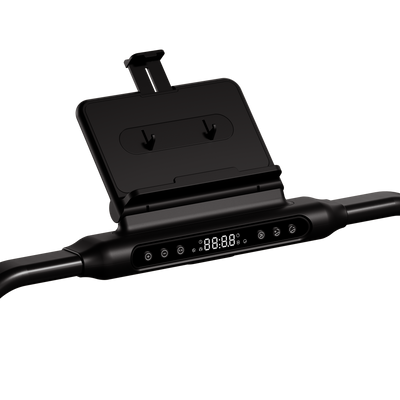
- Staring at your feet: look straight ahead at the 'horizon'. Constantly looking at the display or your feet puts too much strain on your neck and back, which negatively affects your posture.
- Building up too fast: the 10% rule still applies: never increase your weekly mileage by more than 10% per week.
Which treadmill do you choose for running
The Moov Run is the perfect all-rounder for those who enjoy a smooth, flat route and need a powerful motor for their daily mileage. If you’re a runner who loves to push limits with hill sprints and extra intensity, the Moov Run Plus is your ideal match. With its 15% auto-incline, you can effortlessly simulate any climb, right from the comfort of your living room. It's the ultimate home training partner.


