

You want to begin moving, but you do not need to know the final distance or pace yet. A simple plan gives you something to return to. Choose a starting point, repeat it a few times and build only when it begins to feel familiar.
In short
- You will find a walking plan, a walk–jog plan and a route towards 5 kilometres.
- Start at a level where your posture stays relaxed.
- Plan recovery days and avoid increasing everything at once.
- Speeds are guidance; breathing and technique decide your real pace.
- When you have symptoms, are recovering or have a medical condition, discuss the plan with a professional first. Read more about starting again.
How do you begin on a treadmill?
A calm start tends to last longer
The first sessions may feel simple. You are learning the controls, finding a natural pace and noticing how your body responds later in the day. That information matters. Building too quickly makes the routine more fragile.
Begin with two or three sessions a week, for example. Leave room for recovery between running sessions. When you miss a week, you do not have to start from zero. Return to an earlier, familiar week and continue from there.
Build fitness in different ways
Not everyone begins with the same aim. One person wants to walk more often. Another wants to return to easy jogging. Someone else wants to run five kilometres. Choose the plan that suits your current level, not the level you want to reach as quickly as possible.
Walking: a 7-week treadmill plan
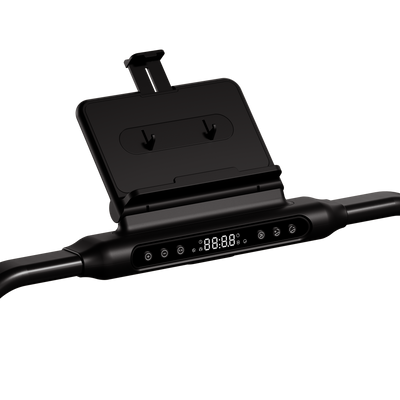
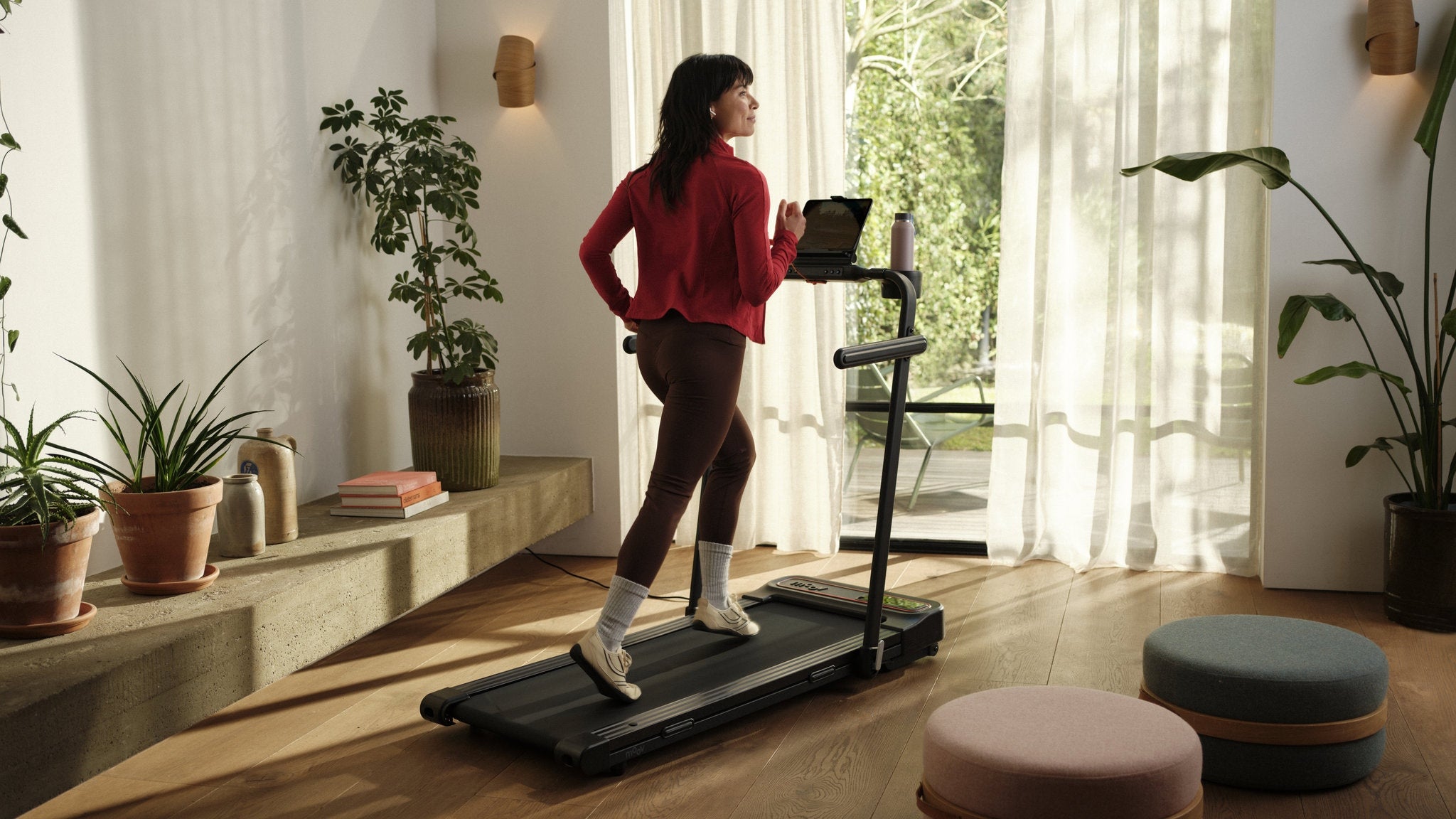
This plan mainly builds duration and repetition. A model such as the Moov Walk is designed for walking and light jogging up to 8 km/h.
|
Week |
Frequency |
Duration |
Approach |
|
1-2 |
3 times |
15–20 min |
Calm walking |
|
3-4 |
3 times |
20 min |
Calm, with the final 5 min a little brisker |
|
5-6 |
3 times |
25 min |
Comfortable walking |
|
7-8 |
3 times |
25–30 min |
Alternate calm and brisk walking |
Beginner training: walking and jogging
Once you can walk briskly for thirty minutes without symptoms, you can add short jogging blocks. Use a treadmill with enough room for that movement and wear suitable shoes. The Moov Run gives you more space for jogging. For automatic incline, the Moov Run Plus adds another form of variation.
Phase 1: warm-up
Walk for 5 to 8 minutes. Begin calmly and increase the pace until you feel warm without your breathing becoming heavy.
Phase 2: intervals
|
Week |
Frequency |
Walking block |
Jogging block |
|
1-2 |
3 times |
2 min |
30 sec |
|
3-4 |
3 times |
2 min |
1 min |
|
5-6 |
3 times |
90 sec |
90 sec |
|
7-8 |
3 times |
1 min |
2 min |
Phase 3: cool-down
Finish with 5 minutes of calm walking. Let your breathing settle before stepping off.
Thirty minutes is guidance, not a test
General activity guidance often refers to 150 minutes of moderate-intensity activity per week for adults. It does not all have to come in thirty-minute sessions, and you do not need to be there immediately. Shorter moments count too.
Frequently asked questions
How long do I need to walk for 10,000 steps?
What speed should I set?
Is incline walking useful?


