

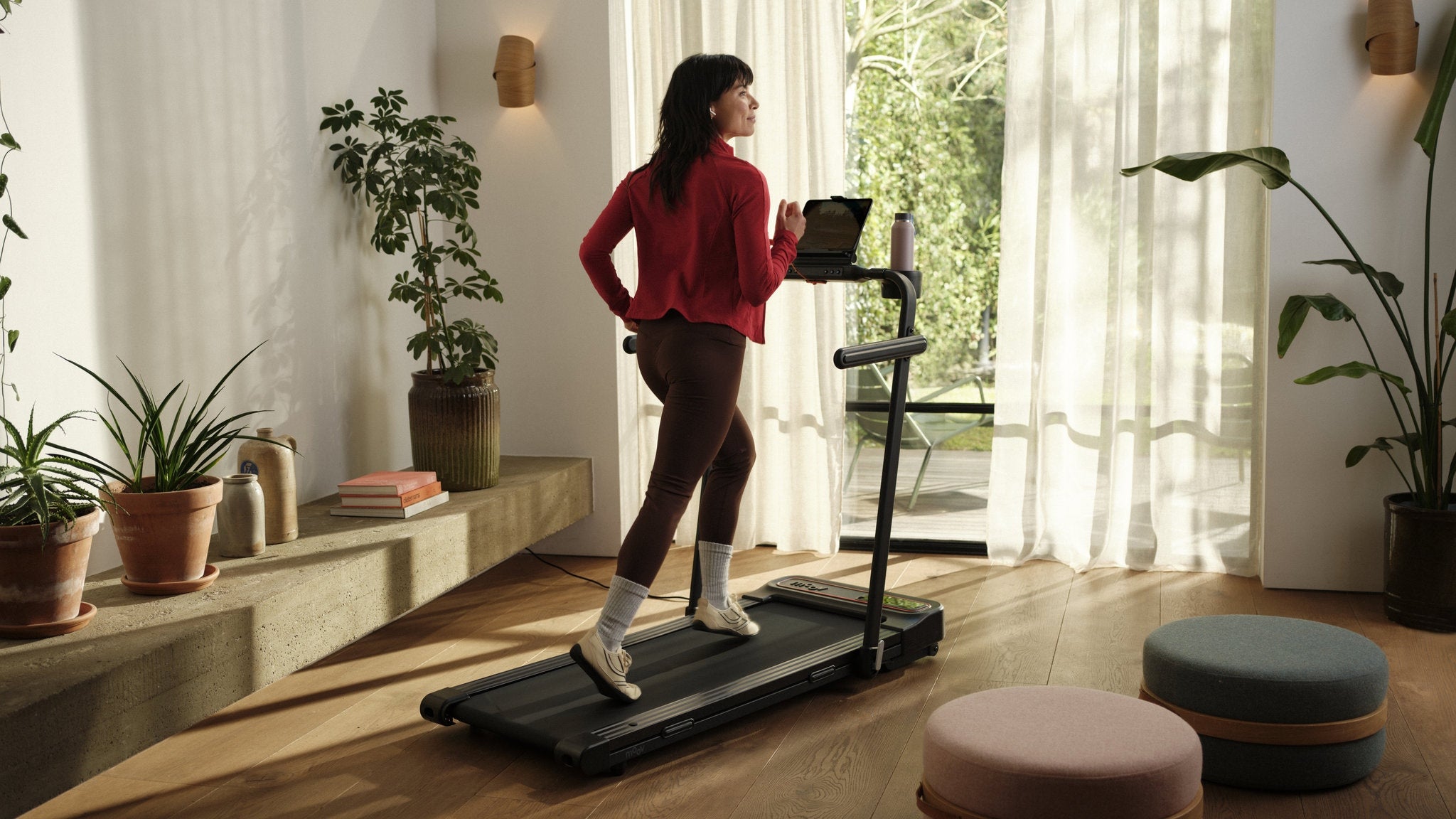
Nach einer Verletzung, Operation oder längeren Pause fühlt sich Bewegung oft anders an als vorher. Ein Laufband kann dir einen festen, kontrollierbaren Ort geben, um wieder Schritte zu sammeln. Nicht als Ersatz für medizinische oder physiotherapeutische Begleitung, sondern als mögliche Ergänzung zu deinem persönlichen Aufbau.
Kurz gesagt
- Ein Laufband bietet eine gleichmäßige, gut planbare Oberfläche.
- Tempo und Dauer lassen sich klein beginnen und schrittweise anpassen.
- Ein allgemeiner Plan ist nur ein Ausgangspunkt. Dein behandelndes Team entscheidet, was für dich passend ist.
- Schmerz, Schwindel oder Unsicherheit sind Signale zum Stoppen und für Rücksprache.
Warum Reha auf dem Laufband?
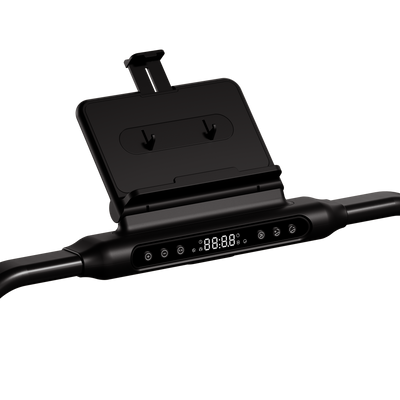
Wenn du wieder anfängst, zählt nicht die Geschwindigkeit. Es zählt, dass du dich sicher fühlst und die Bewegung wiederholen kannst. Ein Modell wie der Moov Walk lässt sich langsam einstellen und zeigt Zeit, Distanz und Tempo an. So kannst du deine Einheit ruhig beobachten, ohne sie größer zu machen als nötig.
Drinnen bleibt die Unterlage gleich. Es gibt keine Bordsteine, nassen Wege oder unerwarteten Hindernisse. Das kann den Einstieg übersichtlicher machen. Gleichzeitig gilt: Ein Laufband entscheidet nicht, welche Belastung medizinisch sinnvoll ist. Das besprichst du mit deiner Ärztin, deinem Arzt oder deiner Physiotherapie.
Die Vorteile
- Planbar: Du bestimmst Tempo, Dauer und Zeitpunkt.
- Nah: Bewegung findet dort statt, wo dein Tag ohnehin stattfindet.
- Messbar: Zeit, Distanz und Geschwindigkeit helfen dir, kleine Veränderungen zu erkennen.
- Wiederholbar: Eine kurze Einheit lässt sich leichter wieder aufnehmen.
Ist Reha auf dem Laufband auch für ältere Menschen geeignet?
Das kann passen, wenn eine Fachperson das Gehen auf dem Laufband für dich freigegeben hat. Der Moov Walk Plus hat – wie die anderen aktuellen Moov-Modelle – einen klappbaren Handlauf und Seitenstützen. Nutze die Steigung während einer Reha nur, wenn sie ausdrücklich Teil deines Plans ist.
Praktische Tipps
- Stelle das Laufband so auf, dass du genug Platz zum Auf- und Absteigen hast.
- Trage Schuhe, in denen du stabil und bequem gehst.
- Halte die erste Einheit bewusst kurz. Ein paar Minuten zählen auch.
- Notiere, wie sich die Bewegung während und nach der Einheit anfühlt.
- Baue nur eine Sache auf einmal aus: zuerst Dauer, dann gegebenenfalls Tempo.
A sample recovery framework
The framework below deliberately avoids fixed speeds. During recovery, the right load is personal. Agree what each phase should involve, how it may feel and what needs to be true before you progress.
|
Week |
Phase |
Possible approach |
Discuss with your healthcare professional |
|
1-2 |
Get familiar |
Short walks at a calm pace |
Posture, support and how you respond afterwards |
|
3-4 |
Repeat |
Complete the same duration comfortably several times |
Frequency and rest days |
|
5-6 |
Build |
Increase either duration or pace by a small amount |
Which variable to change first |
|
7-8 |
Return to daily movement |
Combine treadmill walking with outdoor walking or other movement |
The transition to work, sport and longer distances |
Practical tips
Choose a treadmill that fits your recovery plan and place it on a flat surface with clear space around it.
Wear shoes that feel stable and match the advice you have been given.
Keep the safety stop within reach and learn the controls before stepping on.
Keep a simple log of duration, pace and how you felt during and after each session.
Do not increase speed, duration and incline at the same time.
A disrupted routine is not a failure. Return at the level that fits now.
The best treadmill for slow running
Every Moov can be your slow-running companion. All our models have the features to keep your "niko niko" pace — that smiling pace — steady. Want a treadmill that grows with you? The Moov Run and Moov Run Plus let you slow run and move at higher speeds too. A good base if you're building toward longer distances, or even a marathon.
The best treadmill for slow running
Every Moov can be your slow-running companion. All our models have the features to keep your "niko niko" pace — that smiling pace — steady. Want a treadmill that grows with you? The Moov Run and Moov Run Plus let you slow run and move at higher speeds too. A good base if you're building toward longer distances, or even a marathon.
Frequently asked questions
Can I recover at home without a physiotherapist?
How do I know when I can do more?
Can I use incline during recovery?


