

Starting to run does not have to mean a long session straight away. Alternating walking and jogging gives your body time to get used to the new movement.
In short
- Start from your current capacity, including after a longer break.
- Alternate short jogging blocks with walking.
- Leave rest between running days and repeat a week when needed.
- Work on moving comfortably for longer first, then on distance or speed.
Why building up running is essential
Running repeatedly challenges your muscles, tendons and joints. When that load is new, taking small steps helps. Your fitness can sometimes seem to improve faster than your recovery allows.
A gradual build-up also provides clarity. You do not need to decide how far you should get in every session. The next run stays manageable: a few short blocks, then home again.
No progression plan can rule out injury. Treat it as guidance, with room to adjust for fatigue or symptoms. Running through pain to tick off a week is not part of that.
What you need to get started
Wear shoes you can comfortably walk and jog in, and clothing suited to the weather. A sports watch is not essential; a simple timer is enough for the blocks below.
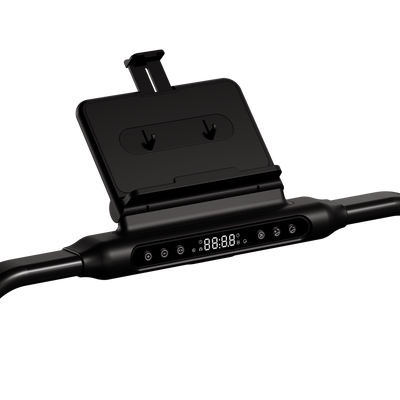
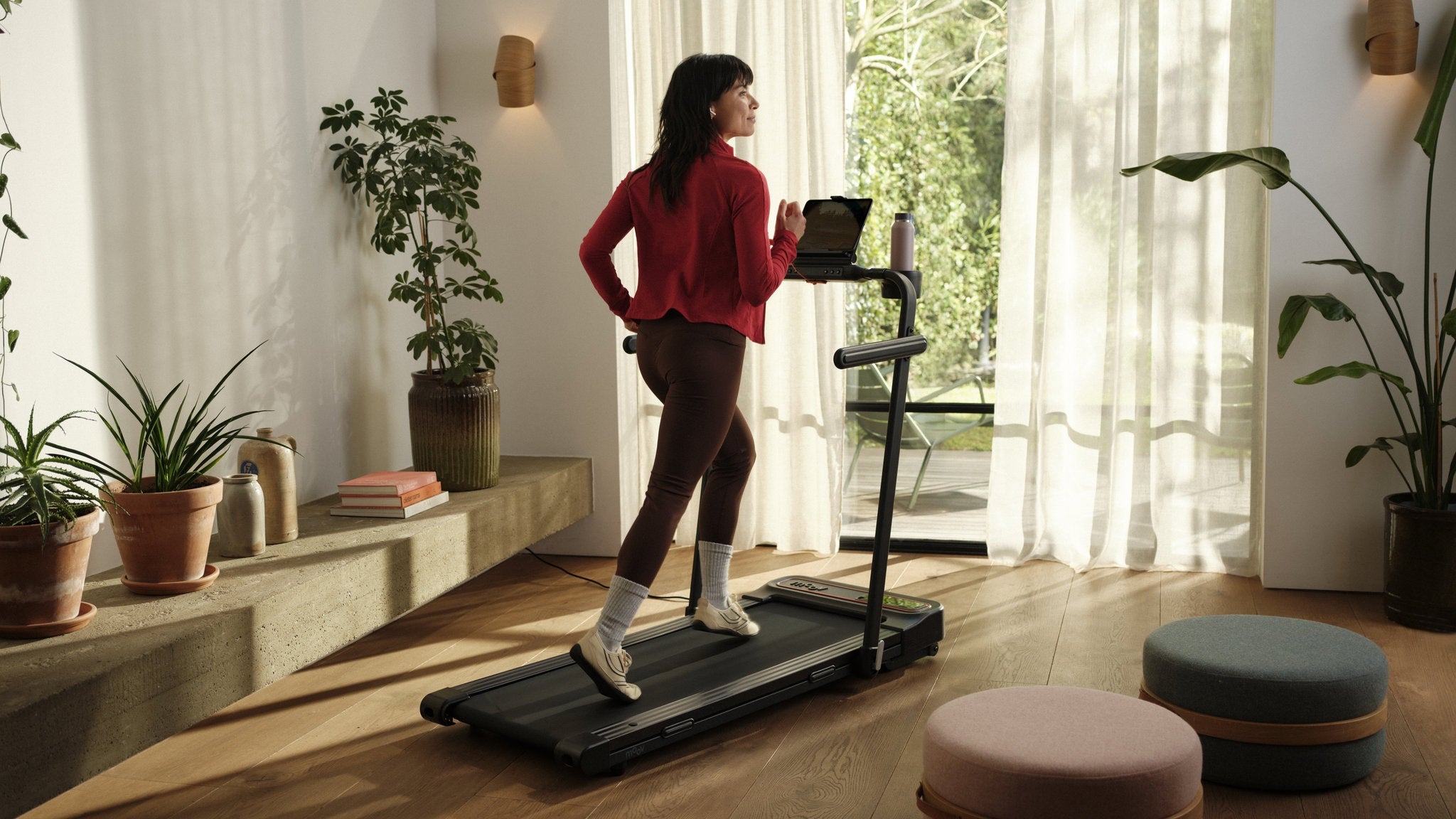
Choose a flat, straightforward route. If you want to train indoors, the Moov Run is designed for walking, jogging and running. Make sure you know the controls and safety features before increasing speed.
Foldable treadmills let you free up your training space after use. Also measure the space around the equipment during use. Explore treadmill accessories to see which additions suit your model.
3 phases of building up running
The transition between phases follows your recovery. You do not need to be ready for the next step by a fixed date.
Phase 1: alternating walking and jogging
Start with short jogging blocks at an easy pace. Walk between them until your breathing feels controlled again. For example, jog for one minute followed by two minutes of walking.
If jogging immediately feels too hard, start with building fitness through walking. That is already a worthwhile start.
Phase 2: from jogging to running
Jogging is already a form of running. This phase mainly focuses on longer continuous blocks, not going faster. Keep the pace easy as you gradually extend the duration.
One example is four minutes of jogging and two minutes of walking, repeated a few times. If you cannot sustain that in control, choose shorter blocks.
Phase 3: working towards 5 km / continuous running
When longer jogging feels comfortable, you can gradually work towards a continuous run. Start with fifteen minutes, for example, and build from there.
Five kilometres takes 35 minutes at 7 min/km, and forty minutes at 8 min/km. Running for thirty minutes does not automatically mean covering the full distance.
Running progression plan (for 6–8 weeks)
This eight-week example is for people who can walk comfortably for thirty minutes and have no symptoms. The aim is to get used to longer jogging blocks. Five kilometres within eight weeks is not the promise.
Plan two or three sessions a week, with at least one day without running between them. Do the same main session on each running day. J means easy jogging and W means walking. Add five minutes of walking before and after the main set.
|
Week |
Main session per running day |
|
|
1 |
6 × (1 min J + 2 min W) |
|
|
2 |
6 × (1.5 min J + 2 min W) |
|
|
3 |
5 × (2 min J + 2 min W) |
|
|
4 |
Repeat week 3 |
|
|
5 |
4 × (4 min J + 2 min W) |
|
|
6 |
3 × (6 min J + 2 min W) |
|
|
7 |
2 × (10 min J + 2 min W) |
|
|
8 |
20–25 min J, with walking breaks if needed |
Technique matters even at a low pace:
- Posture: stand tall with relaxed shoulders;
- Step frequency: take short steps and land lightly on your feet;
- Breathing: breathe in gently through your nose and out through your mouth;
- Treadmill: use a treadmill to keep your pace steady. Outside you often speed up without noticing, but a treadmill keeps your speed consistent.
Common mistakes when building up running
Starting too fast makes easy blocks unnecessarily hard. Choose a pace that feels almost too slow and check your breathing along the way.
Constantly catching up on missed days can also work against you. After a break, return at an appropriate level without squeezing every missed minute into one weekend.
Another trap is dismissing pain as normal training fatigue. Sharp or persistent pain calls for stopping and assessing it, with a physiotherapist or doctor if needed. A light session is not automatically a suitable rehabilitation session.
Tips for success (motivation and consistency)
Choose regular times that need little preparation. Lay out your kit, use a familiar route and arrange to meet someone if helpful. Keep a shorter version ready for busy days too.
After running, note how it felt. Distance is not the only sign of progress; relaxed breathing or comfortable recovery tells you something too. Read more about running motivation if returning remains difficult.
Gentle walking may fit outside running days. An under-desk treadmill offers a way to do this while working. Keep those steps light and do not make them compulsory when you need recovery.
Expert tip
Choose a starting commitment that stays small: on the planned day, put on your shoes and assess how you feel. A shorter session or rest may then be the right choice.


